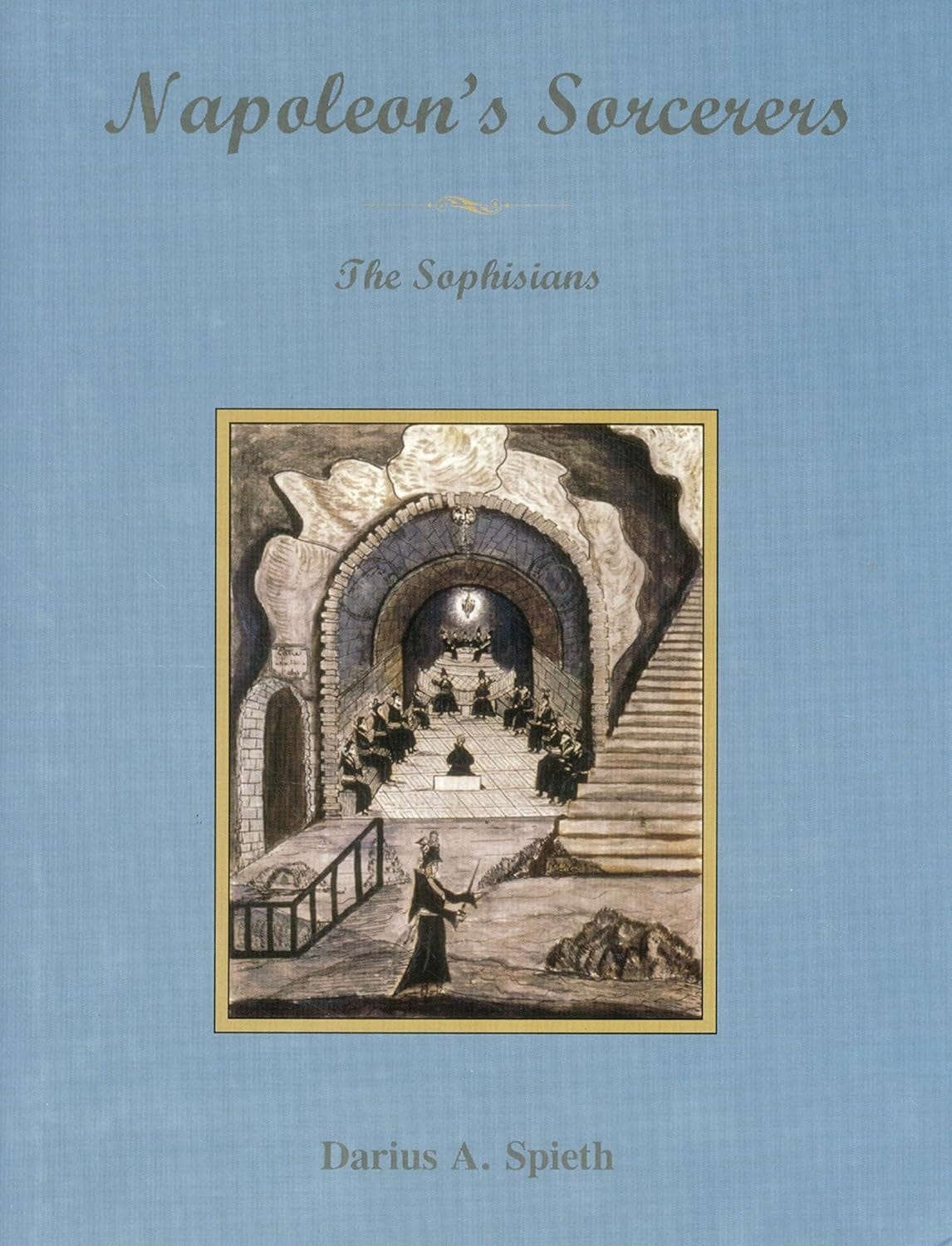
THE BLURB
During Napoleon’s rule, Freemasonic circles in France invented rituals that allegedly first took place in the temple structures of ancient Egypt. This book looks at the cultural environment and intellectual background of the pseudo-Egyptian secret society the Sacred Order of the Sophisians. Founded in Paris in 1801, the Sophisian Order initially catered to veteran military leaders, Egyptologists, scientists, writers, and artists who had joined Napoleon’s Egyptian campaign (1798-1801).
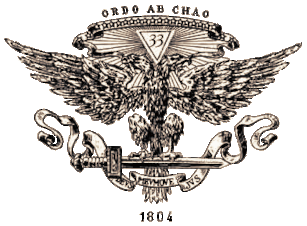
Was Napoleon Bonaparte a member of the Masonic Brotherhood? Multiple hypotheses have been advanced on the subject, and although the probability is high, it has never been definitely established that he was made a Freemason. What is certain is that there was a strong development of Masonic military lodges under the Empire, and Napoleon saw in that Masonic presence a powerful means of military cohesion and a tool for his European ambitions (using his own passionate feelings to unite the Brotherhood).
Napoleon was often linked to the occult and superstition, partly due to his fascination with Ancient Egypt, his alleged experiences in the Great Pyramid, and the popularity of a book called Napoleon’s Book of Fate, which became a best-seller of the occult genre. He also faced claims of being the Antichrist due to numerological interpretations of his name, though these were likely speculative connections made by others. What is certain is that members of the expedition he commanded during the Egyptian campaign brought Freemasonry to the banks of the Nile.
What is also undeniable is that, beginning with Bonaparte’s coup of 18 Brumaire, the Freemasonry would thrive for 15 extraordinary years, multiplying the number of lodges and members. The First Consul Napoleon Bonaparte, understanding the advantages he could derive from the obedient Freemasonry, invested in these reliable men, hoping to be rewarded with faultless servility. He was not disappointed.
Fascinating stuff no doubt.


No comments:
Post a Comment